The coast south of Lima is not only a landscape of dunes, vineyards and Pacific air. It is also a long corridor of pre-Spanish sacred sites, imperial roads, painted adobe walls, early coastal cultures, Inca administration and Spanish-era routes that later tied ports, estates and towns into a new colonial order.
In Miraflores, Huaca Pucllana lets Lima reveal one of its older selves without leaving the city.
A PYRAMID AMONG THE APARTMENTS
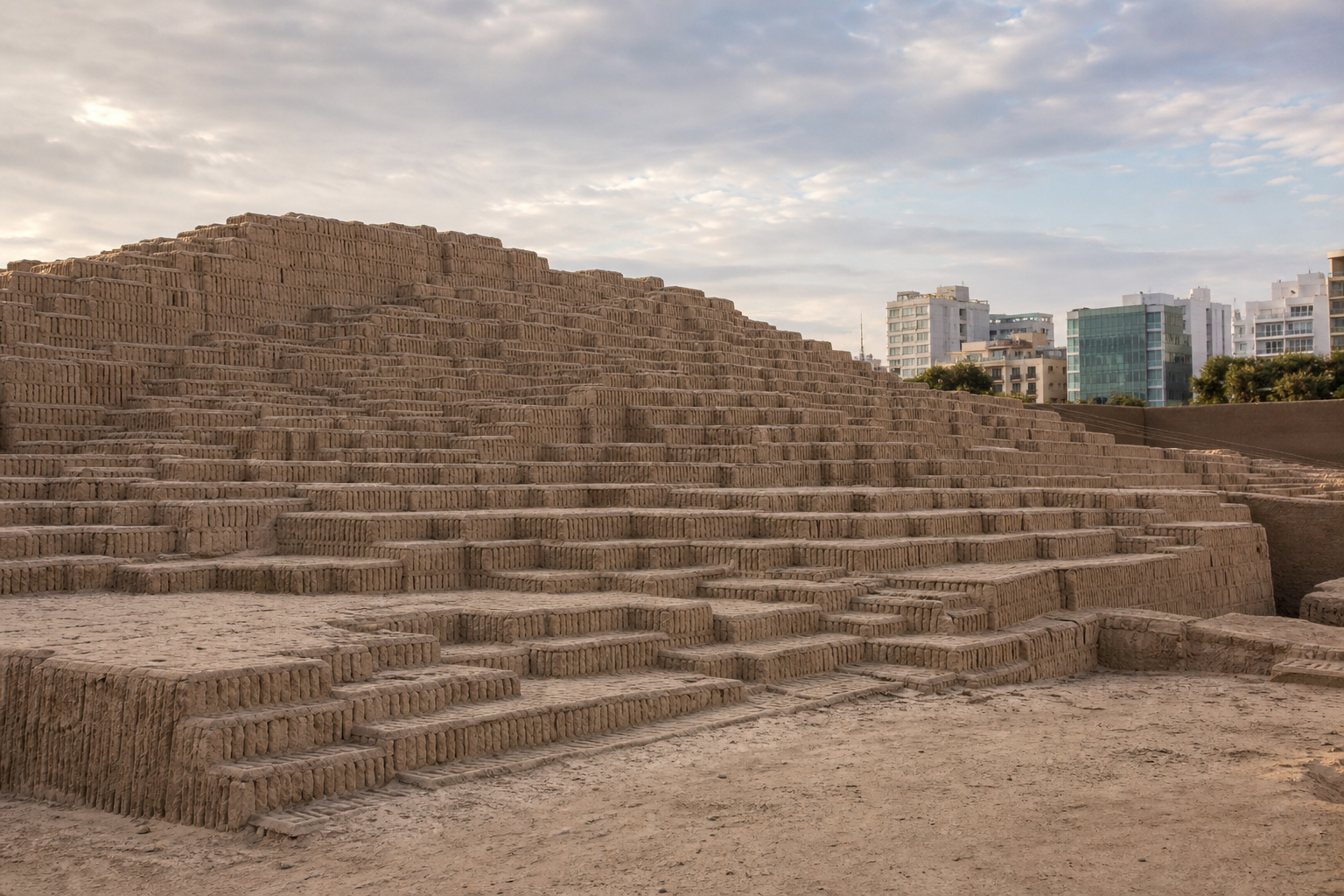
Huaca Pucllana
Located in Miraflores, Lima.
Huaca Pucllana looks like it should not be there: an ancient adobe pyramid rising above cafés, modern apartments and tree-lined streets in the heart of Miraflores. The contrast is part of what makes it memorable. Ancient Lima does not feel distant here. It feels woven directly into the modern city.
Built by the Lima culture more than 1,300 years ago, the site once served as an important ceremonial and administrative center on the coast. Huaca Pucllana reveals that Lima was already a sophisticated desert civilization long before the Spanish arrived, and that traces of that older world still survive in the middle of everyday life.
South of Lima, Pachacamac gives the coast its first deep historical chapter before the journey continues toward Paracas and Ica.
A PILGRIMAGE TO THE ORACLE
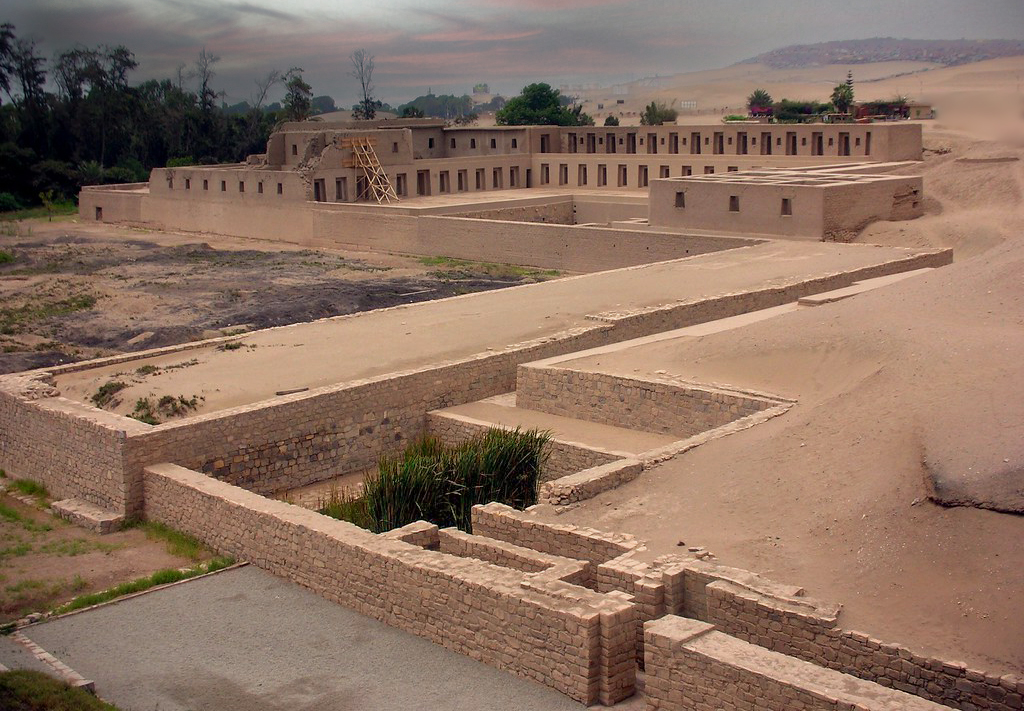
Pachacamac
Approx. 31 km south of Lima, in Lurin.
For more than 1,500 years, Pachacamac was the spiritual center of Peru’s central coast: a vast desert sanctuary where pilgrims came to seek answers from a powerful oracle. Long before Lima existed, people crossed the coast and Andes to reach this sacred place.
Today, the site still feels immense and ceremonial. Adobe pyramids, broad plazas and long desert pathways stretch across the edge of the Lurín Valley, with the layers of different civilizations still visible in the architecture.
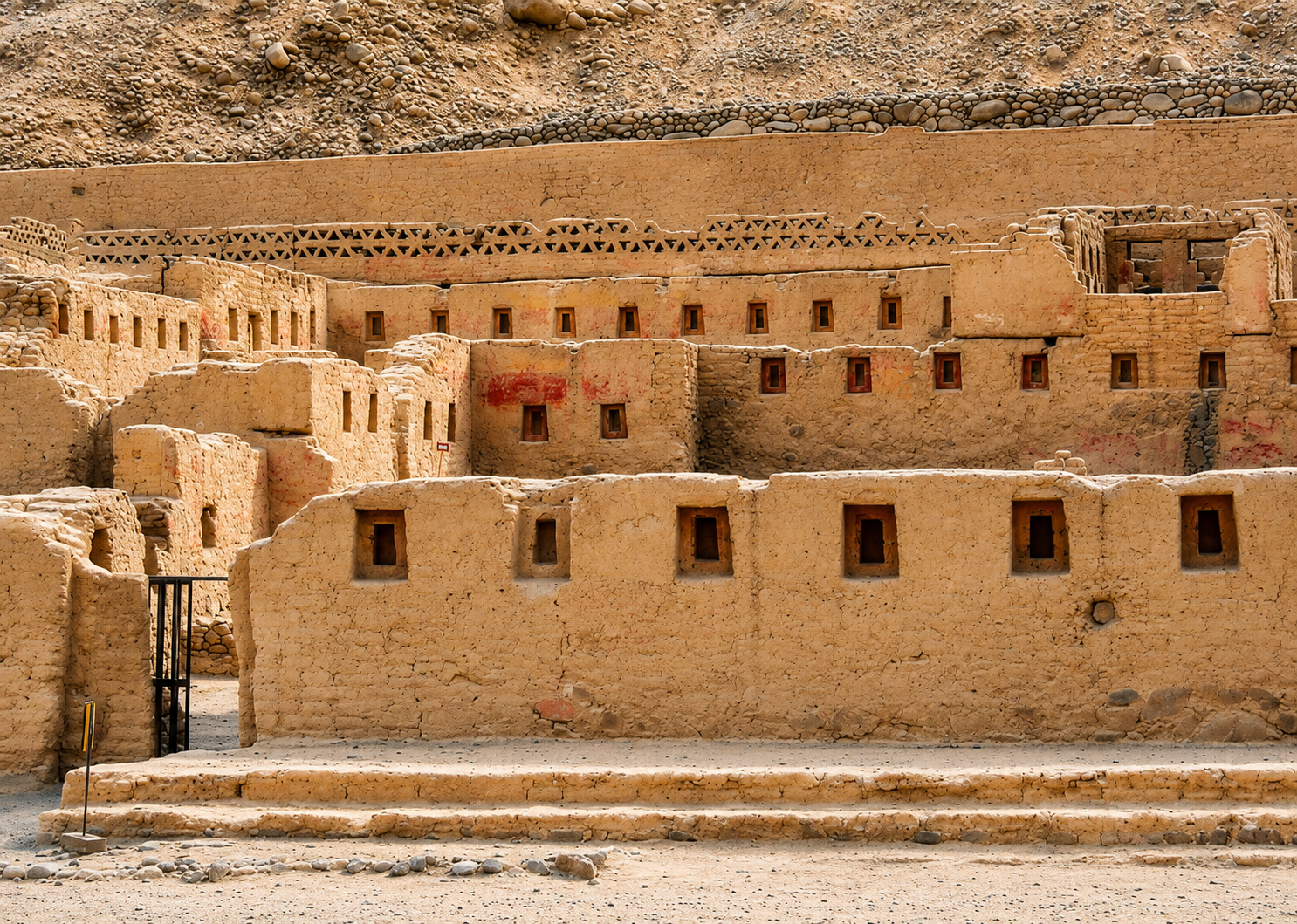
Traces of red, white and yellow pigment still survive on the adobe walls, giving Tambo Colorado an unusually vivid presence.
INCAS ON THE COAST
Tambo Colorado
Approx. 265 km south of Lima, then inland into the Pisco Valley.
On the outer edge of the Inca Empire, Tambo Colorado served as an important administrative center where officials rested, supplies were stored and travelers moved through the coastal valleys. In some ways, it recalls the caravanserais of the Silk Road: protected waystations that connected distant parts of a vast empire.
A NEW VIEW OF AN ANCIENT MYSTERY
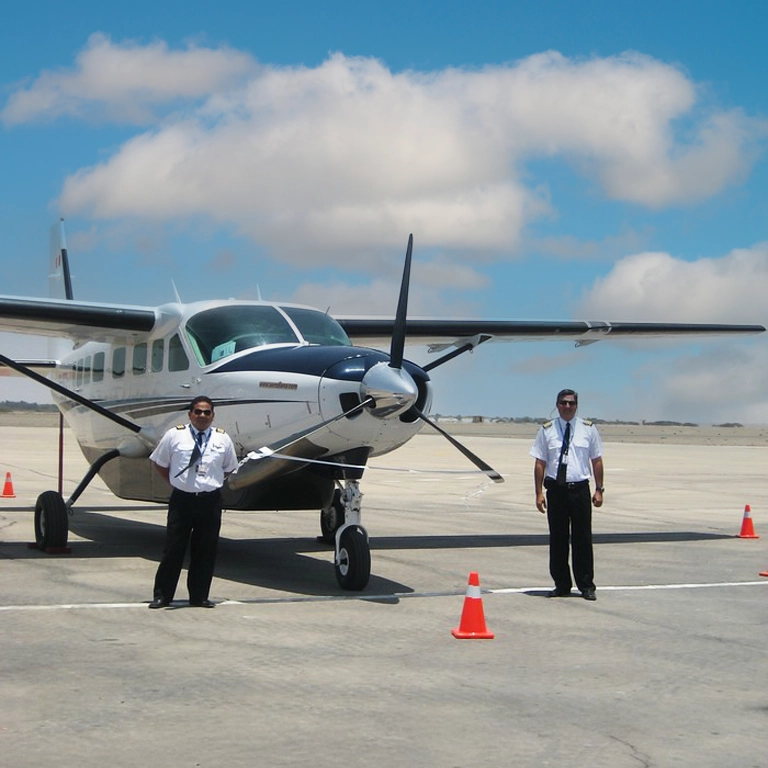
Nazca Lines Flights from Pisco
Flights depart from several locations, including Pisco Airport, near km 231 of the Panamericana Sur.
The Nazca Lines remain one of Peru’s great ancient enigmas. Scholars generally understand who created them and when, but their purpose still resists easy explanation. From the air, the desert begins to reveal the scale and precision of each geoglyph: hummingbirds, monkeys, spiders, human figures and vast geometric designs drawn across the pampa.
Flying from Pisco has a practical advantage: flights are typically operated aboard a modern Cessna Grand Caravan, a larger turboprop aircraft that feels smoother and more stable in the air than the smaller planes commonly associated with Nazca overflights.
History should deepen the journey without flattening it. We shape these visits around timing, good guides, comfortable pacing and the particular questions that make a place come alive.